What Is Trust Wallet?
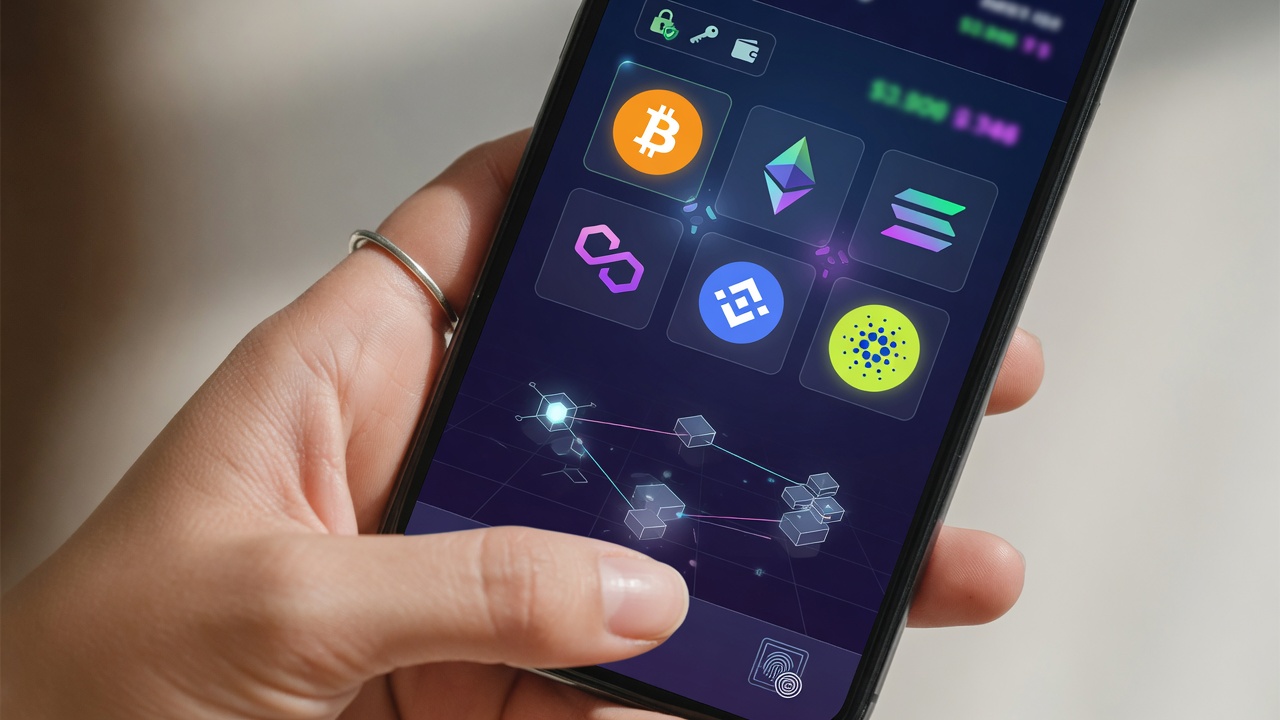
Trust Wallet is a self-custody crypto wallet that puts you in charge of your private keys. You can store, send, receive, and manage digital assets across 100+ blockchains, including Bitcoin, Ethereum, Solana, and more. With built-in dApp access, you can use DeFi protocols, stake tokens, and view NFTs directly from your mobile or browser extension.
Founded by Viktor Radchenko and later acquired by Binance, Trust Wallet now operates independently while staying true to its open-source roots. Its core library, Wallet Core, is publicly available, reinforcing its transparent, community-first approach. Trusted by millions, it’s a gateway to Web3 without intermediaries, giving you full control over your crypto.
Key Features and Benefits
Trust Wallet is a user-friendly app that brings together all your digital needs. Its multi-chain support covers 100+ blockchains, so you can store Bitcoin, Ethereum, Solana, and more—all in one place. The built-in DApp browser connects you to DeFi, Web3 games, and NFT marketplaces without leaving the wallet. Stake your crypto through built-in staking to earn competitive rewards, and buy crypto with fiat via card or bank transfer. For extra security, connect a hardware wallet to the browser extension. Manage NFTs across chains directly. Regular updates, like stablecoin earn, keep the app fresh. With high ratings of 4.7 on iOS and 4.6 on Android, it's clear why millions trust this wallet.
Is Trust Wallet Safe and Secure?
Trust Wallet actually integrates multiple security layers to protect your digital assets without compromising your control. The foundation is self-custody: your private keys are encrypted using the AES algorithm and stored exclusively on your device, never on company servers [trustwallet.com]. This architectural choice means you can interact with the blockchain directly, and only you can sign transactions.
When you login or approve a transfer, the wallet leverages your phone's native security. Your passcode is strongly hashed and kept in a tamper-proof key store, with additional protection from biometric authentication like fingerprint or facial recognition [trustwallet.com]. To counter external threats, a proactive Security Scanner evaluates transaction risks in real time, warning you about potentially malicious addresses or unsafe dApp connections before you sign [trustwallet.com].
Beyond technical safeguards, the project’s credibility is reinforced by ISO certification and regular independent audits, with the security team conducting over 30 assessments annually on both the application and infrastructure [trustwallet.com]. However, true safety also depends on user responsibility. Because Trust Wallet is a non-custodial service, you are the ultimate gatekeeper. This requires you to safeguard your 12-word recovery phrase offline and remain vigilant against phishing attempts; no legitimate support agent will ever ask for your secret phrase [trustwallet.com].
How to Set Up Trust Wallet
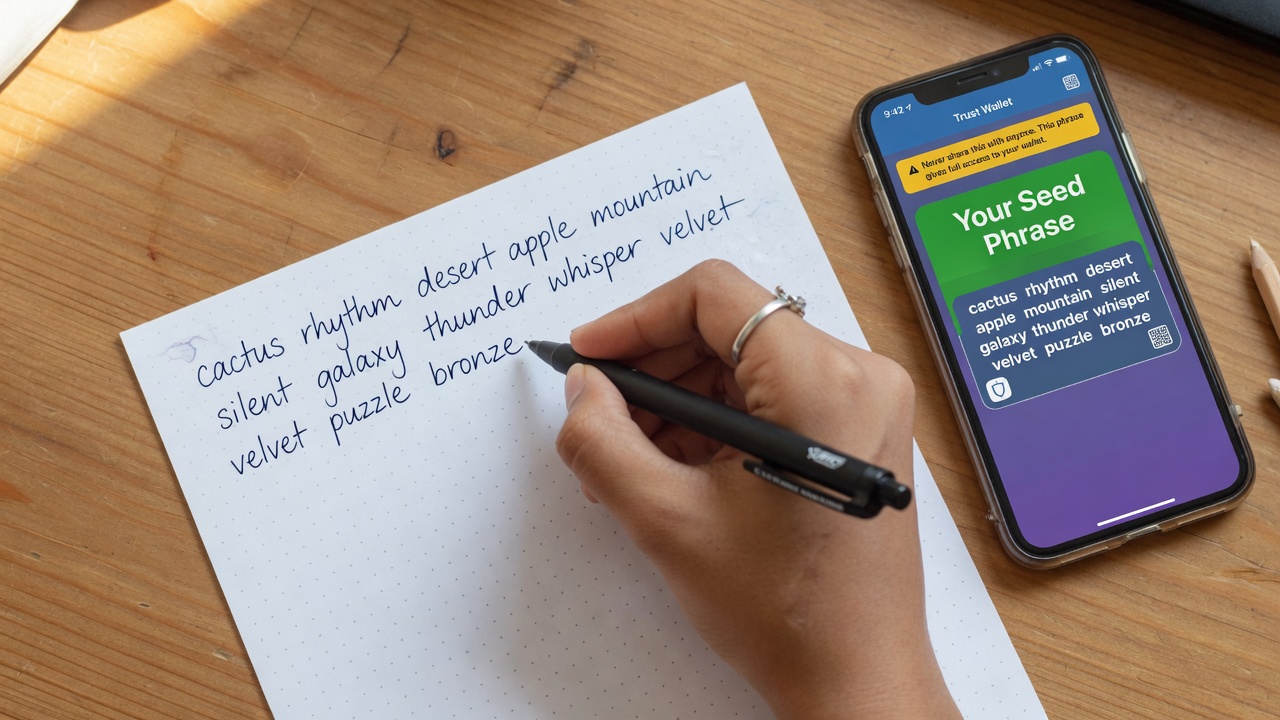
Starting with Trust Wallet is straightforward and puts your control front and center from the very first step. Unlike custodial platforms, there is no lengthy identity verification, no email registration, and no centralized account to approve. You simply create a wallet, back it up, and you are immediately in charge of your private keys.
1. The Official Download
The most critical security principle is to only download the app from the legitimate official channels. You can find it on the Apple App Store for iOS devices and the Google Play Store for Android devices. For desktop users, the Trust Wallet Extension is available directly via the Chrome Web Store. Be extremely cautious of third-party websites offering an APK file for Android; sideloading an apk from an unverified source is a common vector for malware and fake wallets designed to steal your funds.
2. Creating a New Wallet
Once installed, open the app or extension and select the option to "Create a New Wallet." You will immediately be presented with a 12-word Secret Recovery Phrase. This single step is the most important part of the process. This phrase is the master key to your funds. Write it down physically, double-check the order of the words, and store the paper in a secure, offline location. Never take a screenshot of it, store it in a cloud note, or share it with anyone.
3. Verification and Security Essentials
To ensure you have correctly saved the phrase, the app will ask you to re-enter the words in the same order. After this verification, your wallet is active. You will set a local passcode and can enable biometric security (like a fingerprint scan) to protect the app from being opened by anyone else who might access your phone. Remember, because you never used an email or password to sign up, the responsibility for the Recovery Phrase is purely yours; if you lose it, you lose access to your crypto, as Trust Wallet cannot recover it for you [trustwallet.com].
Using Trust Wallet for Daily Transactions
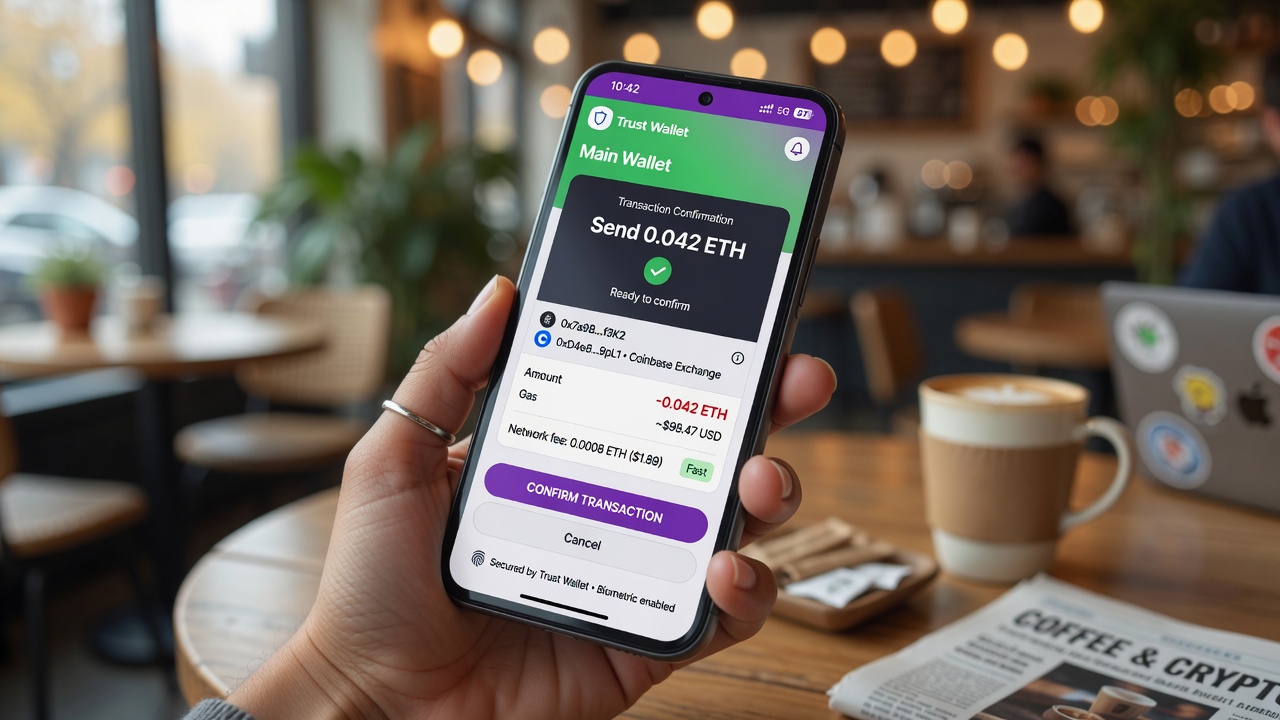
Once your wallet is set up, using Trust Wallet for daily transactions becomes second nature. The platform streamlines sending, receiving, and interacting with decentralized applications (DApps), offering a unified command center for your crypto assets. Whether you are settling a payment or exploring Web3, the interface prioritizes clarity while retaining advanced functionality.
To receive funds, you simply tap the 'Receive' button and copy your wallet address or present the QR code. Sending crypto is just as intuitive: paste the recipient's address, enter the amount, and confirm the network fee. The built-in swap feature lets you exchange tokens across different blockchains directly within the app, eliminating the need to visit external exchanges. These core mechanical actions are gas-efficient and designed to prevent common user errors like selecting the wrong network.
Beyond simple transfers, you can engage with DeFi protocols seamlessly. By using the 'WalletConnect' feature, you establish an encrypted bridge to thousands of DApps on networks like Ethereum and BNB Smart Chain, without exposing your private keys. This lets you use decentralized exchanges, borrow and lend assets, or purchase NFTs. For those looking to grow their holdings passively, the staking module connects you to Proof-of-Stake validators, allowing you to earn network rewards. Additionally, fiat on-ramp integrations allow you to deposit cash from a bank account, while withdrawing crypto to fiat generally requires sending assets to a linked exchange account to cash out responsively.
Trust Wallet vs. Other Popular Wallets
When choosing a self-custody wallet, the differences between Trust Wallet, MetaMask, Coinbase Wallet, and other options can shape your day-to-day crypto experience. All three give you control of your private keys, but they diverge in design philosophy, asset support, and security models. Trust Wallet was built from the ground up as a mobile-first, multi-chain wallet, while MetaMask began as a browser extension for Ethereum and Ethereum Virtual Machine (EVM) chains. Coinbase Wallet bridges the worlds of self-custody and the centralized Coinbase exchange, offering a distinct blend of features.
Trust Wallet supports over 100 blockchains natively, meaning you can store Bitcoin, Ethereum, Solana, and many non-EVM assets without switching networks or adding custom RPCs. MetaMask, by contrast, focuses on Ethereum and EVM-compatible chains (BNB Smart Chain, Polygon, etc.); non-EVM assets like Bitcoin are typically wrapped or require additional bridging setups. Coinbase Wallet also offers multi-chain support but is deeply integrated with the Coinbase ecosystem, allowing easy transfers between the wallet and the exchange—a convenience that comes with some centralization trade-offs.
In terms of user experience, Trust Wallet’s app is designed for newcomers and power users alike. The interface consolidates tokens, NFTs, staking, and a built-in DApp browser into a single, clean dashboard. MetaMask leans heavily on browser extensions, though its mobile app has improved; however, its NFT display is less seamless. Coinbase Wallet’s interface resembles the main Coinbase app, making it familiar to exchange users but sometimes less intuitive for pure DeFi exploration.
Security models also vary significantly. Trust Wallet uses AES encryption to store your private keys exclusively on your device, with biometric authentication and an optional encrypted iCloud/Google Drive backup (if you choose to enable it). MetaMask encrypts keys locally and never stores them on servers, but lacks a native cloud backup option—relying instead on your manual management of seed phrases. Coinbase Wallet supports cloud backups for iOS and Android, but because it’s tied to the Coinbase infrastructure, the attack surface is marginally larger. Importantly, all three are self-custody wallets, meaning neither company can freeze or hold your funds.
For users who prioritize mobile flexibility and broad asset coverage, Trust Wallet often stands out. Its constant updates, community governance calls, and deep integration with Binance DEX give it an edge if you want to swap tokens or earn yield without leaving the app. While MetaMask remains the go-to for heavy desktop DeFi users, and Coinbase Wallet simplifies exchange-to-wallet transitions, Trust Wallet delivers a more comprehensive, all-in-one Web3 hub—especially if you hold a diverse portfolio across both EVM and non-EVM chains. The choice ultimately boils down to your specific needs: if you want a trusted, self-contained mobile gateway to the entire crypto ecosystem, Trust Wallet continues to lead the pack.